
Your starting point
Make the budget personal. Separate one-off costs from ongoing spending, and use dated quotes rather than a single supposed national average.
A useful monthly budget starts with your own commitments, then leaves room for irregular costs. Use the steps below to organise a decision, not to infer an official approval, a guaranteed price or a universal deadline.
Work through the decision
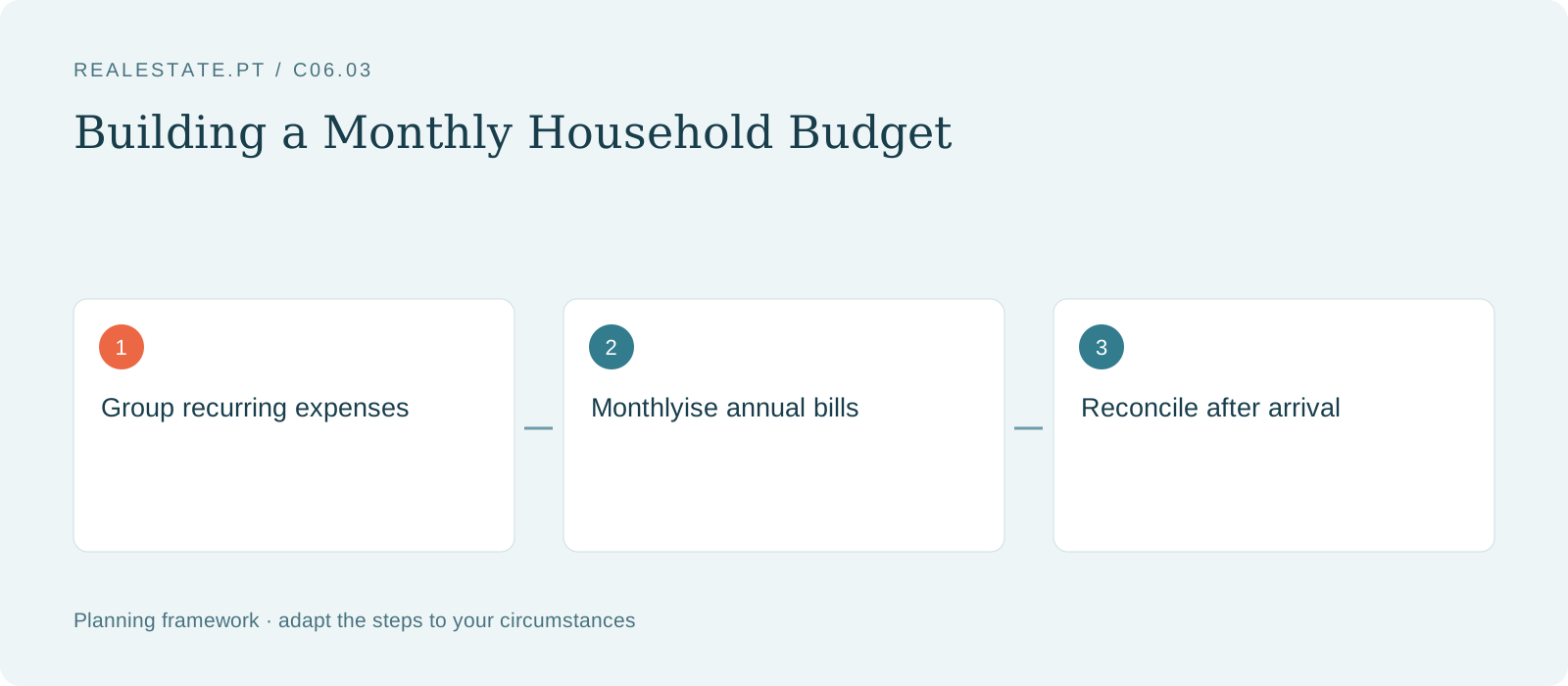
Group recurring expenses
Separate housing, utilities, food, transport, healthcare, education and discretionary spending.
Monthlyise annual bills
Divide relevant annual premiums or subscriptions by twelve while recording the actual payment month.
Reconcile after arrival
Compare planned and actual spending, then adjust the budget rather than treating the first estimate as fixed.
Adapt this to your circumstances
Keep citizenship, current residence, household needs and the location of the home separate in your notes. Ask the responsible authority, institution or qualified professional to confirm any requirement that affects your situation. A checklist used by another household may not apply to yours.
Sources and checks
Banco de Portugal — bank customer information — an official starting point for this topic. The relevant page, its scope and effective date must be checked before a consequential decision.
No market prices, eligibility thresholds or legal deadlines have been invented for this guide. Dates in personal planning tools are suggestions or values you supply.
Make it practical
Open the Relocation Budget Calculator to keep the information you collect with your own assumptions, notes and next actions.
Open Relocation Budget CalculatorSomething needs correcting? Report this page with its URL and a specific source.